

If you inquire into hatred, itself, it transforms into power. You want to feel hatred, be open to it, welcome it, see what it is about. Where did it come from? What is it trying to do? …That, by itself, unfolds it to reveal the truth lying within. – Hameed Ali, Diamond Approach, Spacecruiser Inquiry
These days, it doesn’t take a rocket scientist to see the hatred coursing through American’s political landscape. Progressives and Democrats are the first to point it out in the raucous, contemptuous, racist chants at Trump’s rallies or in his daily twitter missives aimed at the opposition. Around my progressive hometown, posters are scattered in front yards and on main street store windows with the words: “We Stand United Against Hate.” When we look at the damage and cruelty being wielded by so much of the hateful rhetoric today no doubt all this concern with hatred is more than understandable.
However, the moral stance against hatred needs to be met with a strong degree of self-honestly from those of us who are quick to vilify it. Many of us, many, are lugging around boatloads of righteous hatred ourselves. In fact, that’s one of the things the right tends to hate about us – our hypocrisy about hate.
I’ve always thought of hatred as born in the moments of utter heartache where anger, pushed to its furthest limits, is thwarted and gives up. Hatred isn’t the negation of anger, it’s high-octane, compressed anger, the combustible, incinerating power of the darkest, blackest coal. Rather than quickly hot, however, hate has an air of coolness and restraint about it, just like a deceivingly innocent piece of coal that takes time to reveal its real capacity to char the crap out of something. In this way, hatred hides in thoughts and projections that appear harmless but can crush another’s subjectivity with one, seemingly simple ‘idea’ (witness racist ideology). As such, hatred can be a wicked weapon and one that has devastating capacity when linked with mechanisms of power that seem innocuous but can have a devastating impact on people’s physical, emotional and spiritual wellbeing.
But back to the troubling hypocrisy among liberals… hatred can live quite comfortably in the people who hate the haters – people whose hateful parts would – in all honestly – wipe those powerful hating assholes out in a heartbeat if they could without consequence. Hatred can operate in slick ways like this; hiding in a sense of pride and victim entitlement and, unlike anger, can more easily live outside our awareness. Like a sleeping giant, it sneaks out when we issue utterance about someone despicable who disgusts us. Before it becomes action, however, hatred is a feeling. It is not a bad feeling, but an all-too-human feeling, one that may cause more trouble when we forbid it, or act it out, than it would if we found the space and support in our lives to actually feel and explore it. Continue reading “PART TWO: Power – The Essence of Hatred (4 of 5)”


 Fountain’s analysis begins to touch on the ways the Trump phenomenon is inseparable from the culture in which it was born. I remember hearing the predictions of a famous Vedic astrologer before the 2016 election that “America will get the president it deserves” — and we have. Fountain weaves connections between American popular culture, the failures of the American dream under its waking-life capitalism, and our propensity to escape, exponentially compounded today by the addictive appeal of our “devices”. Fountain is dead on here as he points to the complexity of the problems we face in this country; he makes it clear it will require much more than the time it takes for Trump to leave office to address them. (Assuming he leaves, which I still have some faith will eventually happen.)
 more sustainable, respectful engagement with a planet in peril. All of these counter-movements reflect a striving for deeper meaning, connection, authenticity, realness, a movement to grow our humanity through an honest, inward turn. This turn, which recognizes our all-t0o-human vulnerability, invites us to the territory of the feminine principle, territory historically diminished by the misconstruals and imbalances of a patriarchal worldview.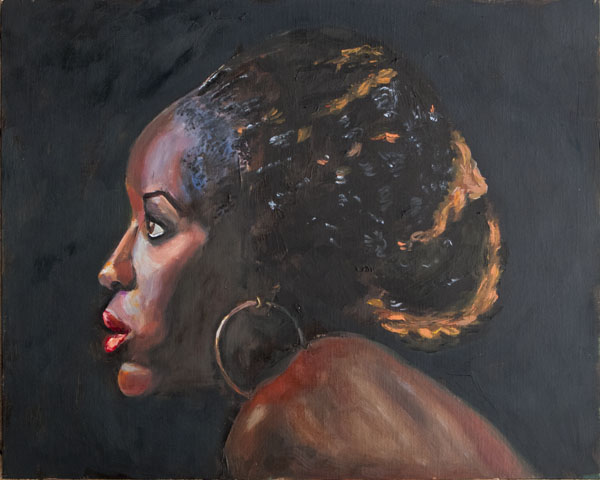
 the feminine (r)evolution